Hattie Carnegie Marks and Signatures
Learn how to identify authentic Hattie Carnegie pieces by their marks and hallmarks.
Hattie Carnegie
Script or block letters on cartouche backing - primary mark from 1940s-1970s
H.C.
Initials mark found on various period pieces
Carnegie
Simplified mark used on later pieces
Hattie Carnegie Jewelry Value Factors
Several factors determine the value of Hattie Carnegie jewelry in today's market.
Sophisticated Designs
Elegant, high-fashion styling appeals to discerning collectors
Quality Materials
Fine faux pearls and crystals rival fine jewelry
Enamel Work
Beautiful colored enamel pieces are highly sought after
Heritage
Historic fashion house name adds prestige and value
Ready to sell your Hattie Carnegie?
Get a free, no-obligation evaluation from our experienced buying team.
- Experienced jewelry specialists
- Competitive market prices
- Same-day payment
- Secure, private transactions
What We Look For in Hattie Carnegie Jewelry
Hattie Carnegie opened her fashion house in 1918, but the jewelry line that collectors chase today launched in the 1940s and ran into the 1970s. The pieces were designed to accessorize the house's ready-to-wear, which is why Carnegie jewelry reads as understated and elegant rather than flashy: tailored brooches, refined faux-pearl necklaces, and enamel work in sophisticated color palettes. That fashion-house heritage — the pieces were favored by celebrities and socialites of the era — is a real part of what buyers pay for.
Marks changed over the decades, and we use them to date pieces. The primary mark from the 1940s through the 1970s is "Hattie Carnegie" in script or block letters on a cartouche backing. Some period pieces carry only the "H.C." initials, and later production was often signed simply "Carnegie." A past-sale example from our inventory: a pair of green and blue rhinestone earrings signed "Carnegie" (pictured below) — the kind of bold two-color stone combination the line used to echo its clothing collections.
_SPECTACULAR_G.jpg)
When we evaluate Hattie Carnegie pieces, condition of the specialty work drives the offer: chipped enamel, dulled faux pearls, or missing crystals all matter. Matched sets and parures bring premiums because so many were split up over the years. In today's market we typically see Hattie Carnegie pieces in the $75 to $500+ range, with early 1940s-50s designs and elaborate parures at the top — and we are always interested in signed examples, single pieces or entire collections.
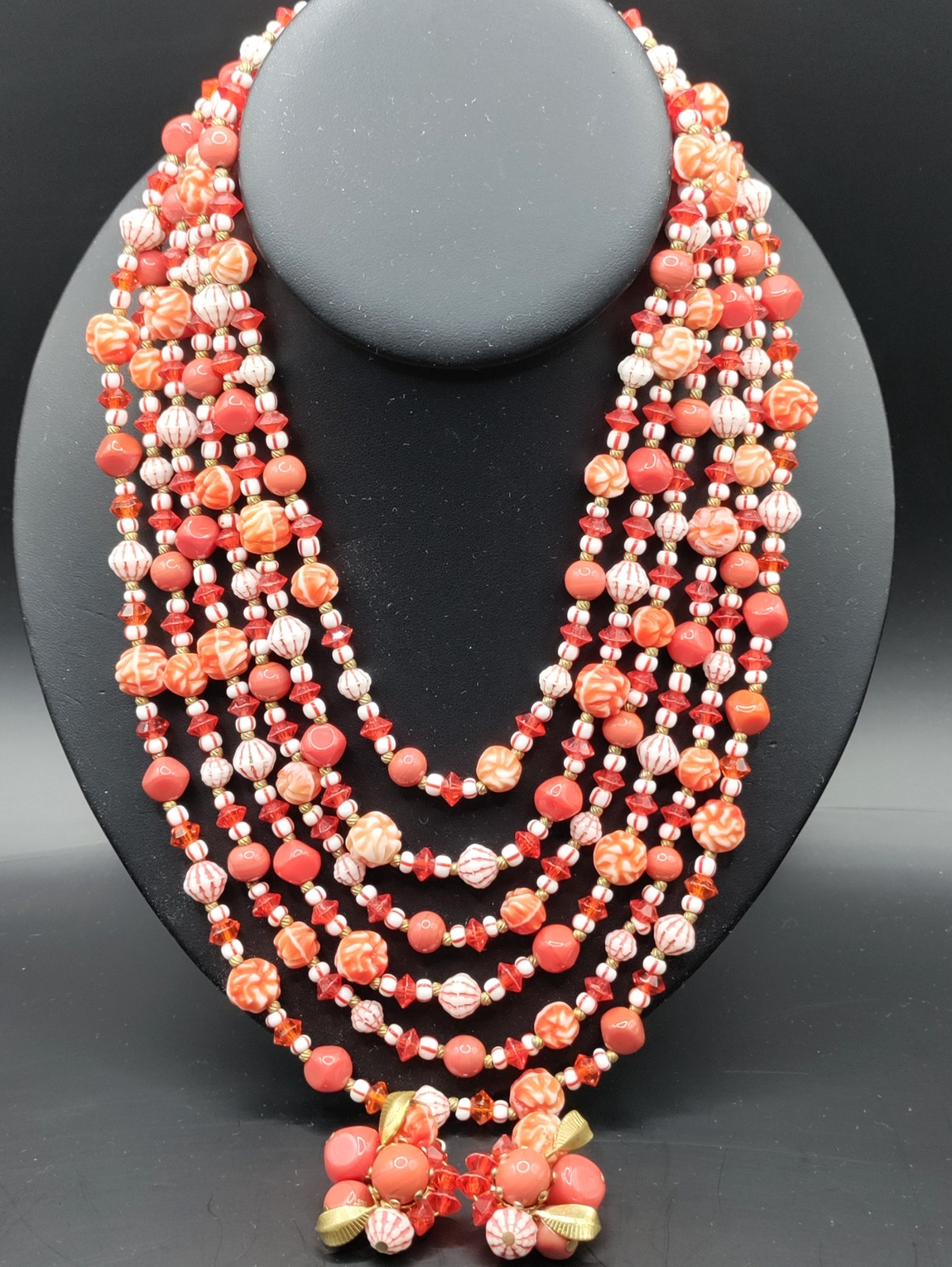
The forms we buy most often are Carnegie earrings, brooches, and multi-strand beaded necklaces — like the coral-and-orange beaded Hattie Carnegie statement necklace in our gallery below. Colored enamel pieces are especially sought after, and because the house maintained high standards across its whole production run, even later "Carnegie"-signed pieces are collectible. If you inherited a box of mid-century costume jewelry, the tailored, refined pieces signed Carnegie are often the ones worth the most.
Hattie Carnegie Gallery
Explore authentic Hattie Carnegie pieces from our collection.
Hattie Carnegie Beaded Necklace
Hattie Carnegie FAQs
Hattie Carnegie pieces range from $75 to $500+ depending on era, design, and condition. Early pieces from the 1940s-50s and elaborate parures command the highest prices.
Look for "Hattie Carnegie" marks in script or block letters on a cartouche. Pieces often feature elegant, sophisticated designs with quality materials including faux pearls, crystals, and enamel work.
Yes, Hattie Carnegie maintained high standards throughout production. The brand was known for quality construction, fine materials, and sophisticated designs that rivaled fine jewelry.
Related Designers
Explore other designers in our collection.
Have Hattie Carnegie Jewelry to Sell?
Specialist buyers of high-fashion costume jewelry. We buy single pieces and entire collections.
Your information is secure and will never be shared. Privacy Policy