Hobe Marks and Signatures
Learn how to identify authentic Hobe pieces by their marks and hallmarks.
Hobe
1927-1980s (with accent mark)
Hobe Sterling
1930s-1950s (sterling pieces)
Hobe (cursive)
Later pieces (script mark)
Hobe Jewelry Value Factors
Several factors determine the value of Hobe jewelry in today's market.
Hand-wired construction
Prong-set stones, intricate work
Sterling silver
Premium materials in early pieces
Crystal quality
High-grade stones and beads
Design complexity
Elaborate, detailed pieces
Ready to sell your Hobe?
Get a free, no-obligation evaluation from our experienced buying team.
- Experienced jewelry specialists
- Competitive market prices
- Same-day payment
- Secure, private transactions
How We Evaluate Hobe Jewelry
William Hobe founded the company in 1927, and the construction method he established is still what sets the brand apart: every stone was hand-wired and prong-set rather than glued into cast settings. When we pick up a suspected Hobe piece, the first thing we do is turn it over — genuine Hobe shows neat wiring and individually prong-set stones on the reverse, a level of handwork that mass-produced costume jewelry never bothered with. This is why Hobe is frequently described as costume jewelry built to fine-jewelry standards.
Marks help us date a piece. The "Hobe" signature with its distinctive accent mark was used from 1927 into the 1980s; "Hobe Sterling" appears on the sterling silver pieces produced primarily in the 1930s through 1950s; and a cursive script mark shows up on later production. A past-sale example from our inventory — a "Hobe" marked sterling brooch, pictured in our gallery below — is exactly the kind of early sterling piece that anchors a collection.
Materials and condition drive value within the roughly $100 to $800+ range we see for Hobe. Early sterling silver pieces and elaborate hand-wired crystal designs command the premium end. During an evaluation we check that the hand-wiring is intact and unrepaired, that prongs still hold every stone tight, whether the base is sterling versus plated metal, and the clarity of the original crystals and beads. Bent wires, replaced stones, or polished-away plating reduce what we can offer — so if your Hobe piece has been sitting untouched in a jewelry box for decades, that originality works in your favor.
We buy Hobe across the company's full 1927-1980s run: hand-wired brooches, crystal necklaces and earrings, and the sterling silver designs from the earlier decades. Later cursive-marked pieces still have collector interest, but if your piece is stamped "Hobe Sterling," it's worth a closer look — those 1930s-50s sterling designs are the ones serious collectors compete for. Bring in single pieces or an entire collection and we will identify the marks and era of each one.
Hobe Gallery
Explore authentic Hobe pieces from our collection.
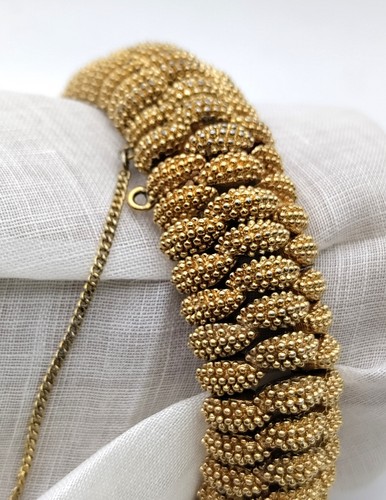
Hobe Sterling Brooch
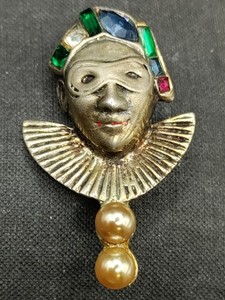
Hobe-Style Harlequin Brooch
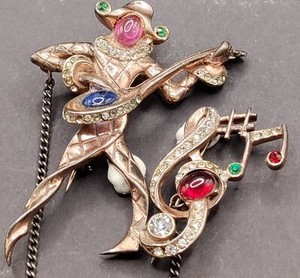
Hobe-Style Jester Brooch
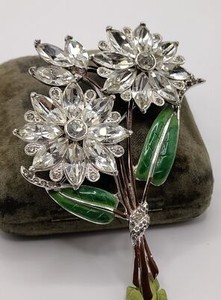
Hobe-Style Floral Spray Brooch
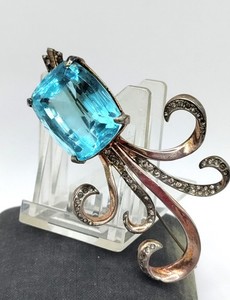
Hobe-Style Sterling Brooch
Hobe FAQs
Hobe pieces range from $100 to $800+ depending on era, materials, and complexity. Sterling silver pieces and hand-wired crystal designs command premium prices.
Look for 'Hobe' or 'Hobe Sterling' marks, often with a distinctive accent mark. Pieces feature hand-wired construction, prong-set stones, and intricate metalwork. Early pieces often used sterling silver.
Yes, Hobe was known for exceptional craftsmanship. Pieces were hand-wired with prong-set stones, creating jewelry that rivaled fine jewelry quality. This construction makes Hobe highly collectible.
Related Designers
Explore other designers in our collection.
Have Hobe Jewelry to Sell?
Fair prices for hand-wired Hobe craftsmanship. We buy single pieces and entire collections.
Your information is secure and will never be shared. Privacy Policy